Your most visible asset should be your hardest-working one.
Why Us?
A website isn’t a brochure. It’s an asset that either generates leads, qualifies buyers, and supports sales every day, or it doesn’t. We design and build for the first outcome.
BMG’s design and development team builds on WordPress, Elementor, Shopify, OpenCart, and Magento, with full integration into the CRMs, marketing automation platforms, scheduling tools, and analytics stacks our clients actually use.
Every site we ship is:
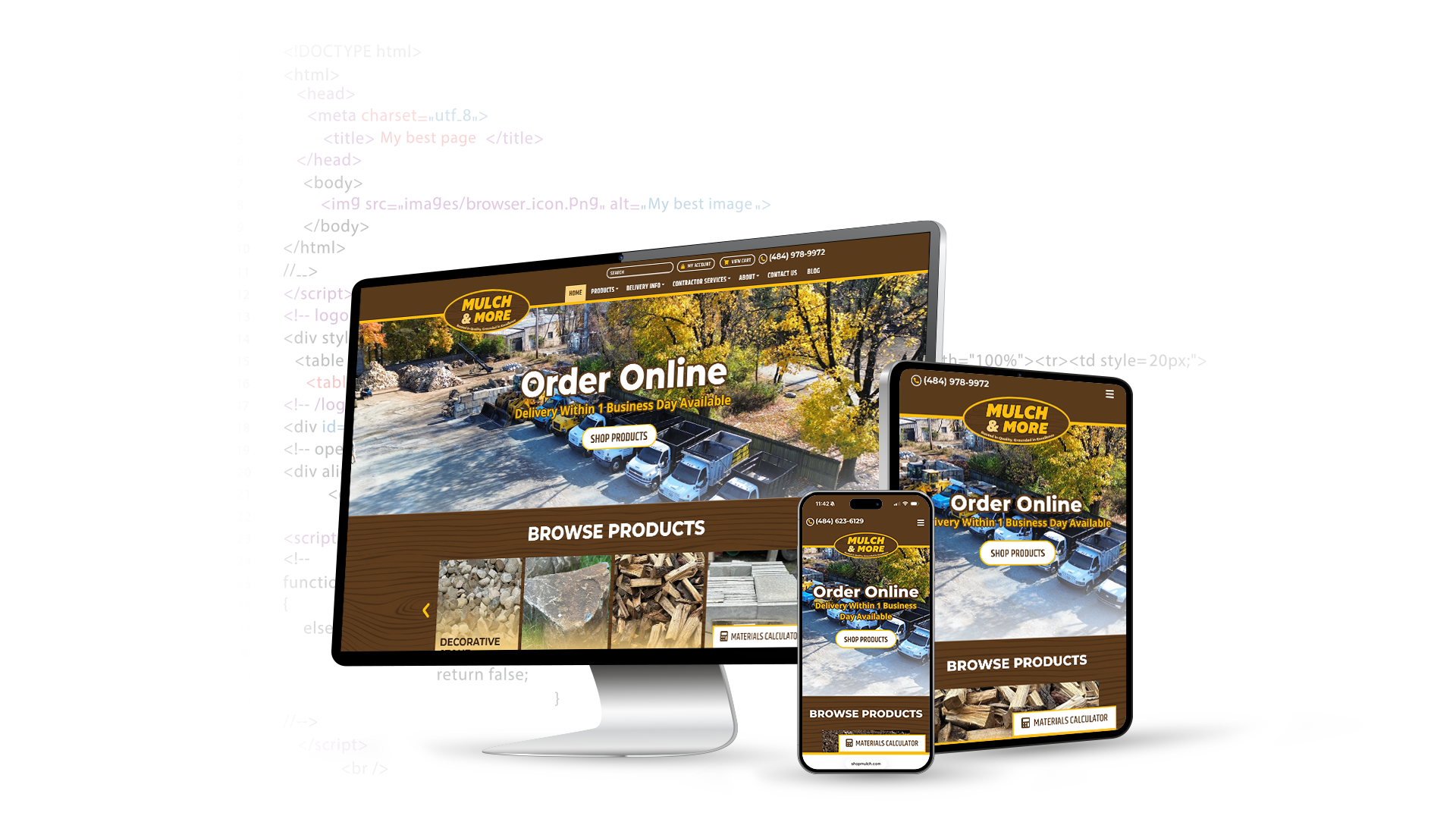
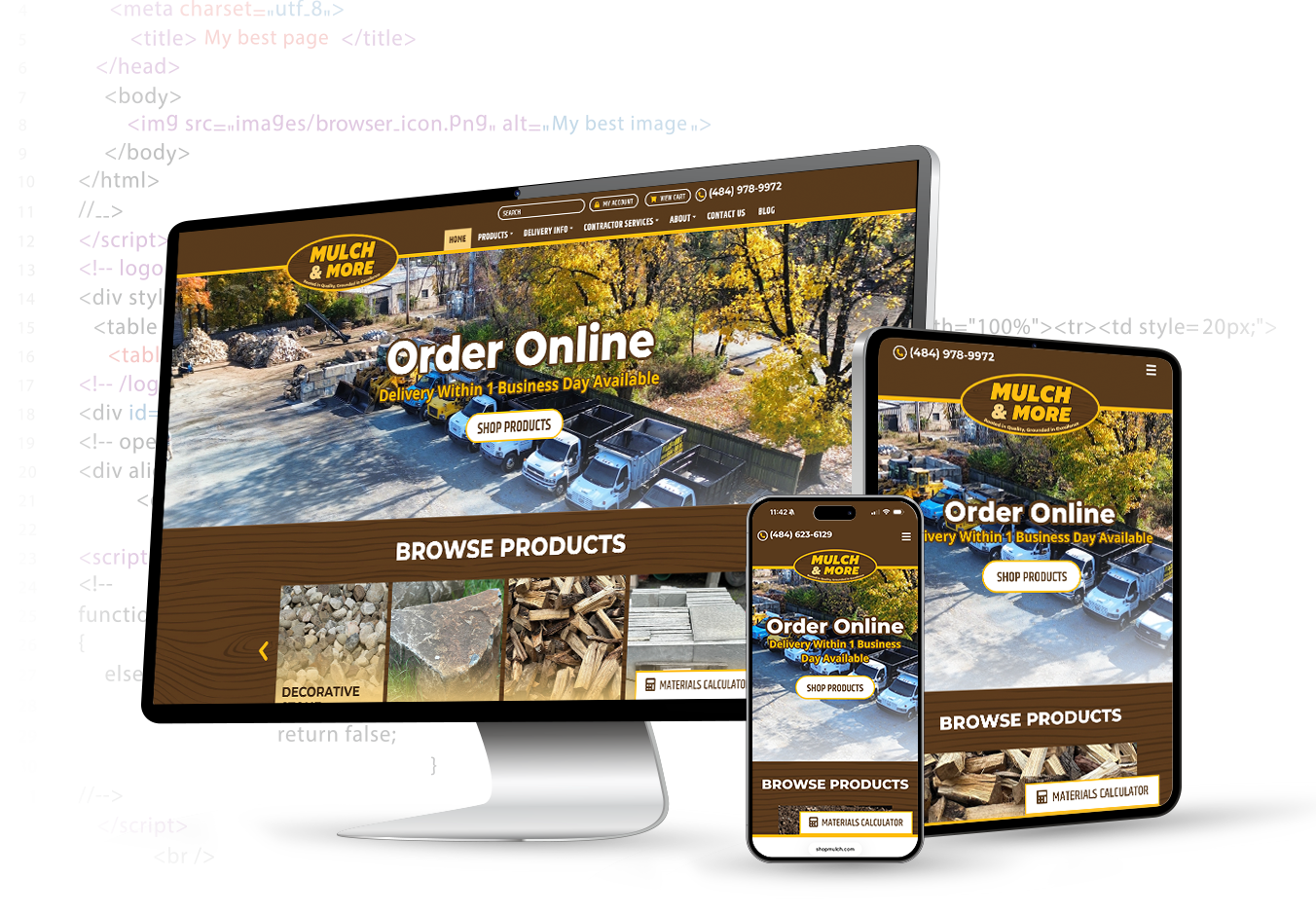
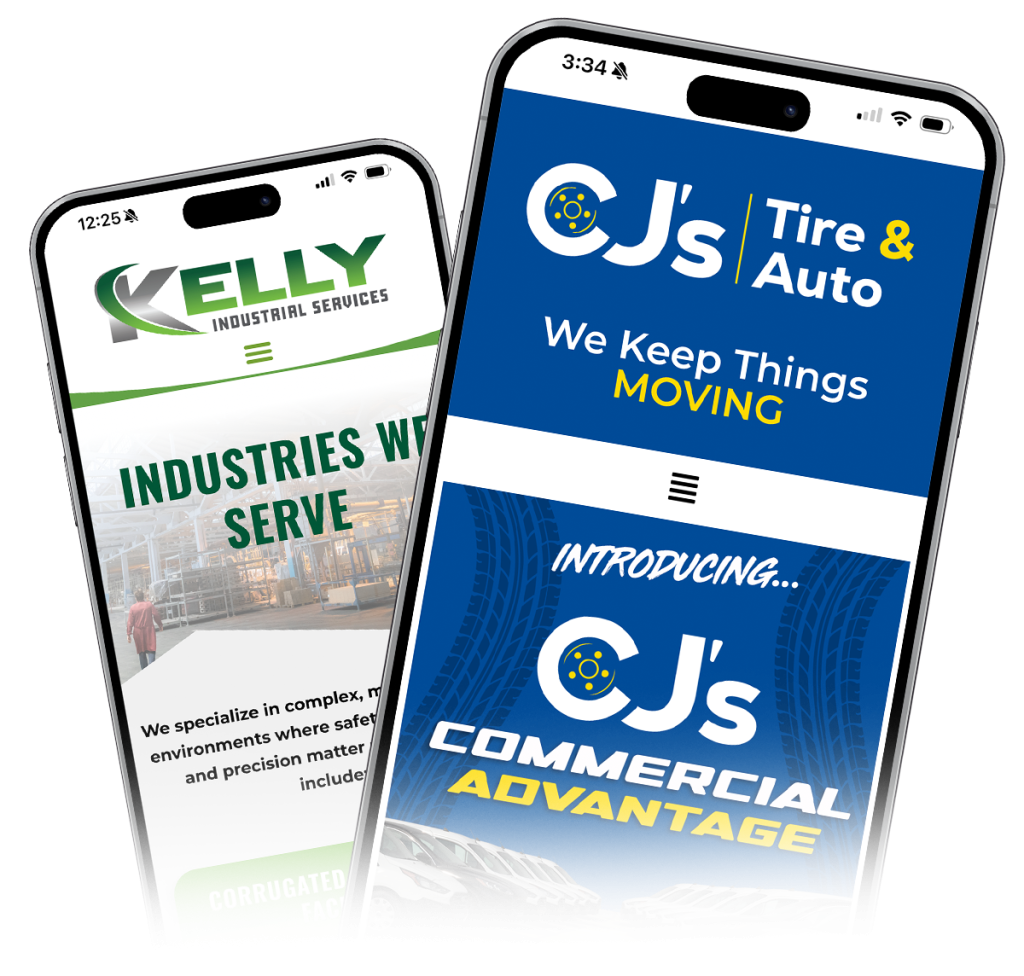
- Responsive across every device — phone, tablet, desktop, and the screen sizes that don’t exist yet
- Built for speed — optimized Core Web Vitals, which Google ranks and users feel
- Structured for search — clean semantic HTML, proper heading hierarchy, metadata, and hardcoded JSON-LD schema that AI crawlers can actually read
- Designed to convert — every page built around a specific user intent and a specific action we want them to take
- Easy for your team to maintain — so you’re not calling an agency to change a phone number
We’ve built sites for automotive dealers, industrial service companies, home services operators, financial services firms, healthcare providers, and professional services practices. The platforms change. The discipline doesn’t.
What is Responsive Web and App Design?
A responsive website adapts to whoever is looking at it – phone, tablet, laptop, or whatever ships next year. In 2026 that is the floor, not the goal. Responsive is assumed, the way electricity is assumed.
What actually separates a website that works from one that merely exists:
- Performance under real conditions. Google grades your site on Core Web Vitals: how fast the main content loads, how quickly the page responds to a tap, and how much the layout shifts while loading. These are measurements taken from your actual visitors, not a lab score you can game.
- Structure that machines can read. Semantic HTML, correct heading hierarchy, and JSON-LD schema markup. This is what determines whether AI search tools can understand your business well enough to cite it.
- Conversion architecture. Every page built around one user intent and one clear action, rather than a menu of everything the business does.
- Integration. Connected to the CRM, marketing automation platform, scheduling tool, and analytics stack you actually run, so a form fill becomes a tracked lead instead of an email.
We’ve built sites for automotive dealers, industrial service companies, home services operators, financial services firms, healthcare providers, and professional services practices. The platforms change. The discipline doesn’t.
Why you need Responsive Web Design.
The data hasn’t gotten kinder over the last decade. It’s gotten sharper:
- Roughly 62–64% of global web traffic now comes from mobile devices. A site that performs poorly on a phone loses the majority of its visitors before the first scroll.
- Only about 48% of mobile sites pass all three of Google’s Core Web Vitals, against 56% on desktop, according to the HTTP Archive Web Almanac using Chrome field data. More than half the mobile web fails the test Google is grading on. That is a problem for most businesses and an opening for the ones who fix it.
- Speed converts. In Google’s own published case studies, Vodafone improved its largest contentful paint by 31% and recorded 8% more sales. Rakuten measured a 33% lift in conversion rate from Core Web Vitals work alone.
- AI search is answering questions without sending anyone to a website. AI Overviews now appear on roughly half of tracked queries. Sites without properly structured data and readable schema are simply absent from the fastest-growing discovery channel there is.
A responsive, fast, well-architected website isn’t a cost center. It’s the foundation every other marketing dollar runs through.
Frequently Asked Questions
A web design agency creates the strategy, architecture, layout, messaging, visuals, user experience, and technical build of your website. We design the overall look and feel, write or organize content, build the site on a modern CMS, optimize it for search engines, and ensure it’s built to convert visitors into leads or customers.
If your site looks outdated, loads slowly, performs poorly on Google, isn’t converting, is difficult to update, or doesn’t represent your brand well—it’s time for a redesign. Many businesses come to us because their site feels “behind competitors,” delivers a weak user experience, or no longer aligns with their marketing goals.
Our services include website strategy, UI/UX design, content organization, wireframing, full creative design, custom development, CMS setup, SEO foundations, analytics tracking, and launch support. We also handle integrations like CRMs, scheduling tools, e-commerce components, and marketing automation systems.

Website pricing depends on page count, custom design requirements, integrations, content needs, and functionality. Smaller websites may require a simpler investment, while larger, conversion-focused or multi-template builds cost more. We provide a clear scope and transparent pricing so you know exactly what you’re getting.
Typical timelines range from 8–12 weeks, depending on the complexity of design, number of pages, feedback speed, and development requirements. High-functionality or large websites may take longer. We map out a clear timeline during discovery so milestones and expectations are understood.
We can handle full content creation, collaborate with your team, or optimize existing copy. We align content with search intent, brand messaging, and conversion goals so your site is both user-friendly and search-friendly.
We primarily build on WordPress, OpenCart, Shopify, Magento and other reliable CMS platforms depending on your needs. Our goal is to create a site that’s easy for your team to update, scalable for the future, and optimized for performance and security.
Yes. We commonly integrate websites with CRMs, lead routing systems, marketing automation, scheduling tools, e-commerce platforms, and analytics. Your website becomes a fully connected part of your marketing and sales tech stack.
We begin with a discovery call to understand your goals, audience, existing site performance, and technical needs. From there, we outline a strategy, timeline, design approach, and clear deliverables before moving into full design and development.